You probably don’t think much about the water running through your home until something starts going wrong. Maybe the bathroom taps develop stubborn white marks, the shower doesn’t feel as refreshing as it used to, or your freshly washed glasses come out looking cloudy. At first, these things seem like minor annoyances. After a while, though, they become part of an everyday battle that never quite goes away.
In many households, the culprit is hard water. It’s a common issue, and while it isn’t usually a health concern by itself, it can affect plumbing fixtures, household appliances, cleaning routines, and the overall experience of using water. The good news is that once you understand what’s causing the trouble, there are practical ways to manage it without spending money on equipment you may not need.
What Makes Water Hard in the First Place?
Water becomes hard when it contains relatively high levels of dissolved minerals, particularly calcium and magnesium. These minerals often enter groundwater as it moves through limestone, chalk, and other mineral-rich rocks. By the time the water reaches your home, it may contain enough dissolved material to leave noticeable deposits.
You might not see anything unusual when you fill a glass. The difference becomes more apparent during everyday activities, especially when water is heated or mixed with soap.
For instance, you may notice that shampoo takes longer to rinse out or that soap doesn’t produce much lather. Laundry can feel stiff, and the inside of a kettle may gradually develop a pale, crusty layer. None of these signs proves that hardness is the only issue, but together they can suggest that testing would be worthwhile.
Hardness is commonly measured in milligrams per litre as calcium carbonate, or in grains per gallon in some countries. A water test can establish how hard your supply is and help you decide whether treatment makes sense.
Why Mineral Deposits Keep Coming Back
One of the most frustrating things about mineral deposits is how quickly they can return after cleaning. You scrub the shower screen, polish the faucet, and finally get everything looking decent. A few days later, the marks are back.
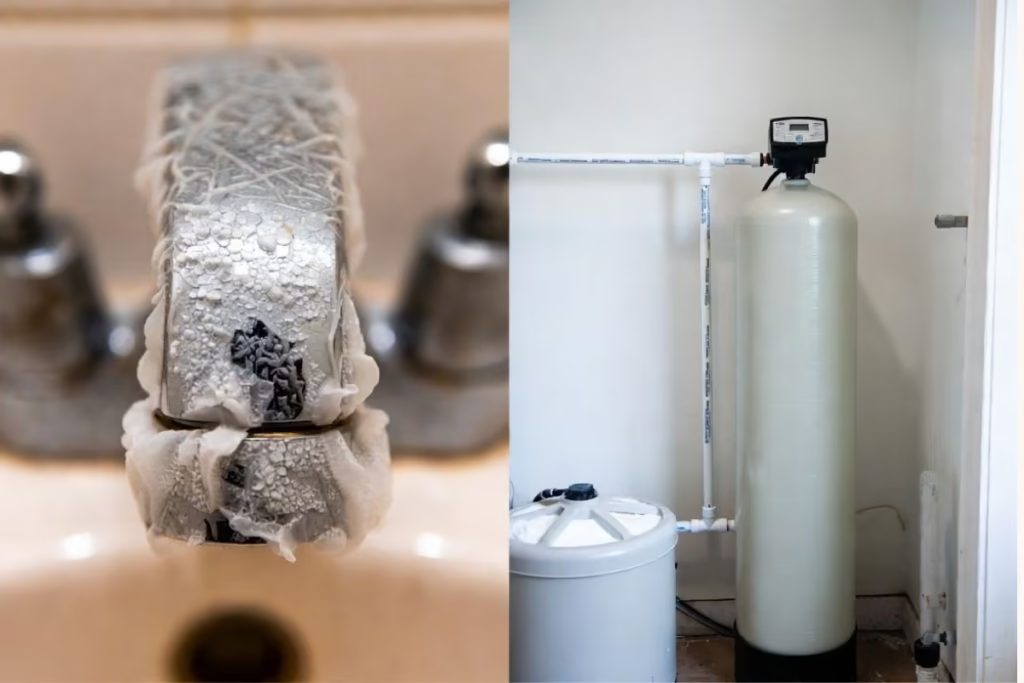
This happens because water leaves small amounts of dissolved minerals behind as it evaporates. Over time, those deposits become more noticeable, particularly around taps, showerheads, sink edges, and glass surfaces.
Inside plumbing and appliances, mineral buildup can create a different set of problems. Heating elements, water heaters, and other equipment may accumulate scale, which can interfere with heat transfer and contribute to higher energy use or additional maintenance. Deposits can also narrow small openings, affecting water flow.
The extent of the problem depends on several factors, including water hardness, temperature, usage, and the design of the equipment. Not every home with hard water will experience serious damage, so there’s no need to panic over a few spots on the bathroom mirror.
Still, persistent scaling is worth addressing. Regular cleaning can control visible deposits, while suitable treatment may reduce the amount that forms in the first place.
Is Hard Water Bad for Your Health?
This is a fair question, especially when the water looks cloudy or leaves residue on kitchenware. In general, hardness caused by calcium and magnesium is not considered a health hazard at typical drinking-water levels. These minerals are also found naturally in many foods.
However, hardness alone doesn’t tell you whether water is safe to drink. A supply can be hard and otherwise safe, or soft and contaminated. Microorganisms, certain metals, and other harmful substances require separate assessment.
If your water has suddenly changed colour, developed an unusual odour, or acquired an unfamiliar taste, don’t assume hardness is responsible. Check for local water advisories and arrange appropriate testing if the change persists or there is reason to suspect contamination.
People using private wells or borewells should pay particular attention to regular testing because groundwater conditions can vary. Municipal supplies are generally treated and monitored, but household plumbing and storage systems can still influence the water that comes out of the tap.
In short, don’t judge drinking-water safety by how clean the glass looks. Reliable testing provides a much clearer picture.
Choosing a Water Softener That Fits Your Home
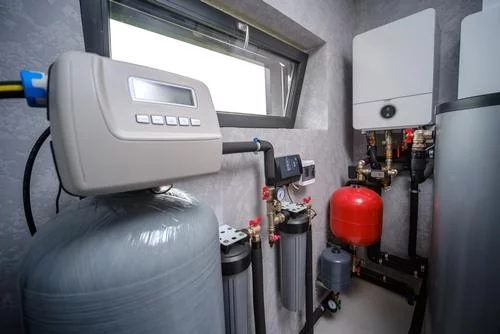
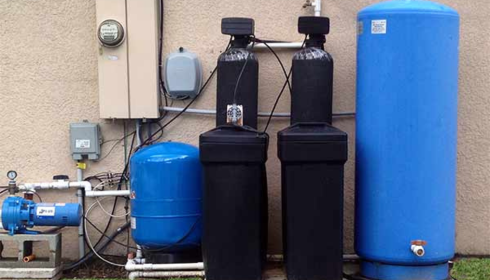
If testing confirms that hardness is causing ongoing problems, a water softener may be worth considering. Traditional ion-exchange systems work by exchanging calcium and magnesium ions for sodium or potassium ions, reducing the minerals responsible for conventional hard-water scale.
The right system depends on more than the number of bathrooms in your house. Your water’s hardness level, daily consumption, incoming flow rate, and available installation space all matter. A system that’s too small may regenerate too frequently, while an oversized unit can cost more than necessary.
Think about your main concern, too. If scale affects the entire home, a point-of-entry softener may help protect showers, pipes, and appliances. If your biggest frustration is residue on drinking glasses, a whole-house installation might be more than you need.
Traditional softeners require regular maintenance, including checking the salt supply and following the manufacturer’s regeneration and servicing instructions. They also use water during regeneration, so efficiency and wastewater requirements deserve consideration.
Another important detail: softening doesn’t remove every contaminant. If your drinking water has concerns beyond hardness, you may need a separate treatment system selected for those specific substances.
Salt-free scale-control products are also available, but they generally do not remove hardness minerals in the same way as conventional ion-exchange softeners. Understand the difference before buying.
Simple Ways to Reduce Hard-Water Frustrations
Not every household needs a major installation. Sometimes, a few changes can make daily life easier while you decide whether more extensive treatment is justified.
- Clean fixtures regularly. Use a suitable cleaner to remove deposits before they become stubborn. Follow the surface manufacturer’s instructions, particularly on natural stone and delicate finishes.
- Maintain appliances. Descale kettles and other appliances when their instructions recommend it. Avoid using products that could damage seals or heating components.
- Use cleaning products appropriately. Hard water can affect how soaps and detergents perform, so follow product directions instead of automatically adding more.
- Test before investing. A reliable hardness test can help you compare treatment options and avoid paying for unnecessary equipment.
- Keep an eye on performance. Slower flow, repeated scaling, or unusual appliance behaviour may justify a closer inspection.
These steps won’t change the mineral content of your water, but they can help manage the effects and make maintenance less of a chore.
A Better Approach to Water at Home
Hard water is one of those household problems that can quietly consume time and money. The deposits seem small, yet they show up everywhere, from the kettle in the kitchen to the shower at the end of a long day.
The answer isn’t necessarily to install the most expensive treatment system on the market. Start by understanding your water, identify the problems that matter most, and compare solutions based on what they actually do.
For some homes, routine cleaning and appliance maintenance will be enough. Others may benefit from a properly sized softener or a combination of treatment methods. Either way, testing and informed decisions are more useful than guesswork.
Water should make everyday life easier, not create another chore on the list. With a little attention and the right approach, you can keep mineral deposits under control, protect your household equipment, and make a more confident decision about the water flowing through your home.